The product.
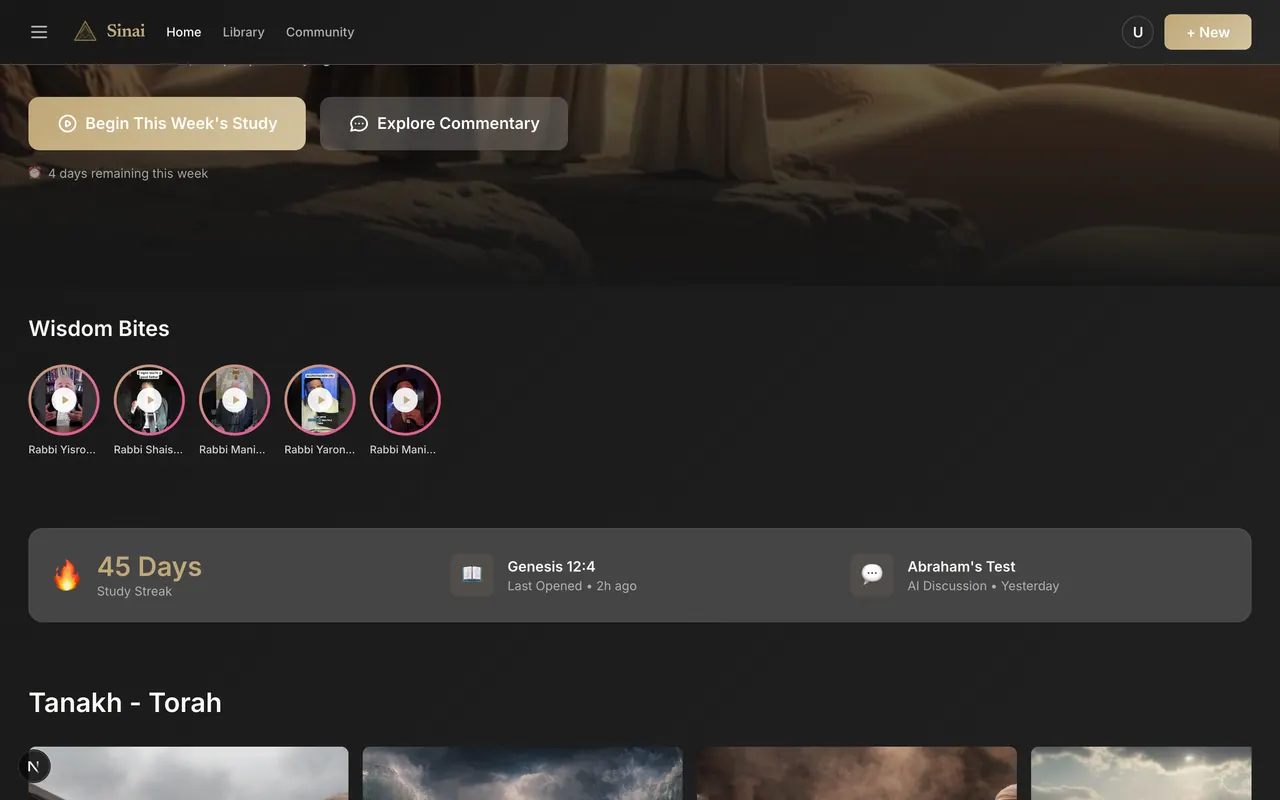
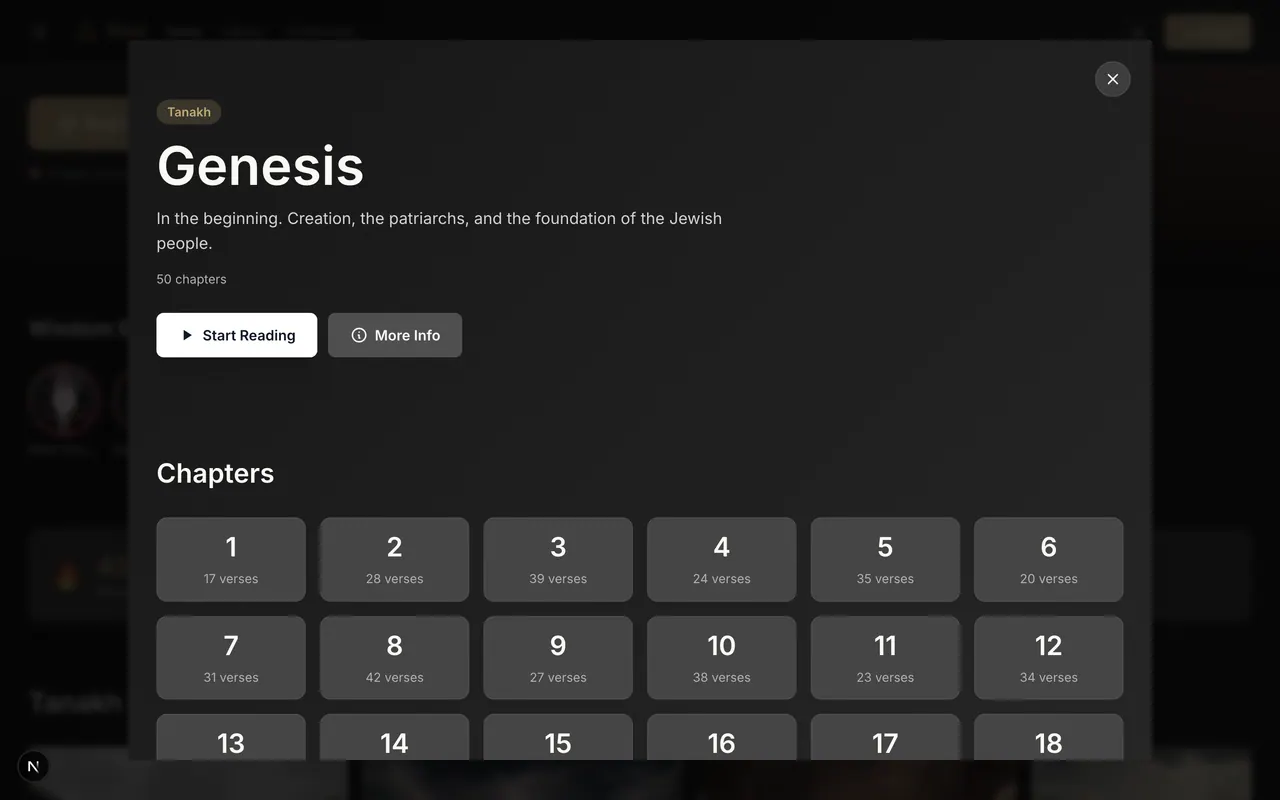
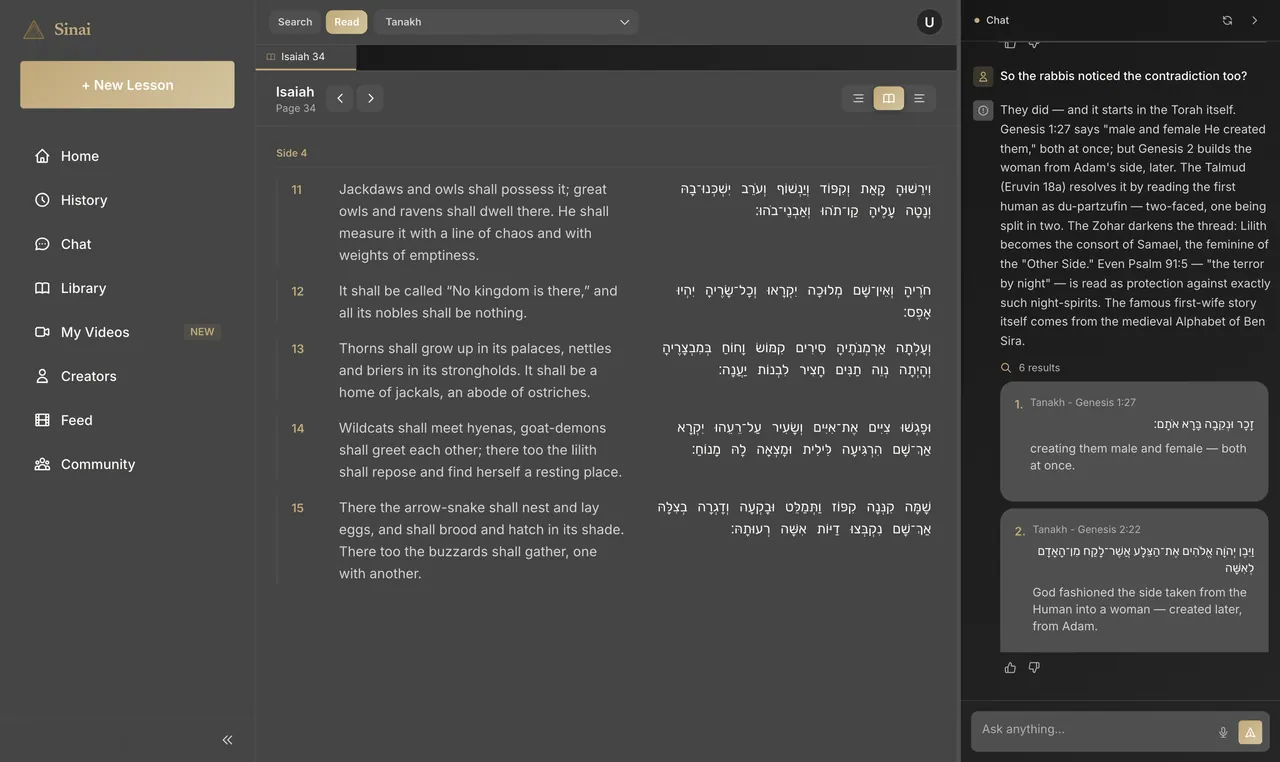
A study companion for ancient texts and the centuries of commentary layered on them. A Netflix-style library opens into a VS Code-like reader: the Hebrew or Aramaic original beside any translation, tabs and modes, every word clickable into an on-the-fly micro-dialogue that pulls real sources. A copilot chat reads alongside you – it opens texts live in the reader, walks the citation graph between commentaries, and works in voice. Underneath: hybrid retrieval – vector + full-text + a Neo4j graph of the citation network, ranked by each text's real authority in the corpus.
Problem
Studying ancient texts means navigating an enormous web of cross-references – centuries of commentary stacked on a single line – across Hebrew and Aramaic originals and dozens of translations. Generic AI invents citations; generic readers can't walk the real graph of connections. There was no partner that was both grounded in the actual corpus and able to traverse it.
The call
Don't build a chatbot over the texts – build a copilot that reads with you. Ground every answer in the real corpus, cite real sources, traverse the actual citation graph, and let it drive the reader like a study partner – instead of trusting a clever model alone.
Outcome
Reached production-ready in about three months with a team I assembled and led – cloud-independent on AWS, signed off by a hard-to-please devops, ready to scale. It never shipped: not for technical reasons, but because the project kept building instead of launching and never met a single user. The sharpest lesson I've had in why products die – and the reason I now put shipping and real feedback before anything else.